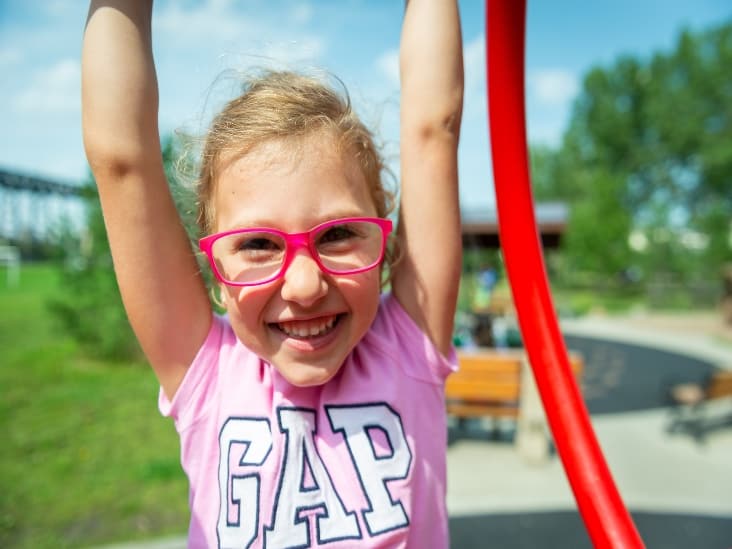
You may have noticed your child starting to show interest in the monkey bars, even though they are far from being able to reach them on their own. You may then wonder what age is the right age to introduce your child to the monkey bars? As soon as a child shows interest that is in fact the perfect time.
Introduction to using the monkey bars can start as early as preschool ages 3 to 5. If a child seems to show interest before age three it is okay to familiarize them with the concept of holding on to the bar.
In this article we will look closer at turning play on the monkey bars into learning experiences as well as physical growth.
How to Introduce Your Child to The Monkey Bars
When it comes to introducing your child to the monkey bars, slow and steady wins the race. A child who is new to the concept of monkey bars will not always get it on the first try. This is not entirely because they do not understand the concept. It is also due to the fact it uses a great deal of upper body strength and momentum. Try to follow these steps when introducing your child to monkey bars. Explaining these steps before you do them will help comprehension.
- Climb up the ladder or platform
- Grab the first starter monkey bar with both hands
- Practice your grip
- Swing forwards
- Grab the first bar with dominant hand
- Bring other hand to new bar
- Repeat
The First Bar Is A Leap of Faith
First things first, you must be able to reach the first bar. Have your child climb up the ladder or platform and grab the first bar. Children ages 5 and up should be able to climb with little guidance. Ages 3 and 4 do not have as well developed gross motor skills and may need more help. If they cannot reach the bar then hold them up to the bar.

Grip is important, so Practice Holding on Tightly To the Bar
Allow your child to hang from the first bar to feel the weight of their body and arm muscles at work. Explain they must have a tight and secure grip or they will fall. Allow and encourage your child to swing back and forth on the bar to feel the momentum their body creates. This will help them get used to the feeling of not having their feet on the ground and relying on those upper body muscles.

Always be ready to catch in case your child falls off the monkey bars. This is not always possible and sometimes they will fall to the ground below. Your reaction as a parent or guardian makes a huge impact on how the child will also react. If you act scared or worried the child will feel and react upon that emotion. The best reaction is not to overreact.
Help the child up, dust them off and applaud their hard work while encouraging them to try again.
Swing To The Next Bar And Grasp Tight
While holding or bracing your child have them swing and grab the first bar, using their legs to help with the swinging movement. They may need to swing back and forth for a moment to get a good first swing. Starting with one hand on the bar and ending with two. Repeat until your child has successfully reached the end!
If your child is scared and needs that extra help hold onto their legs or lower body to support them as they cross the monkey bars the first few times, and then encourage them to keep trying on their own.
Conquer the Monkey Bars
Keep up the good work and practice as much as possible to build those upper body muscles and grip strength. Your child will master them in no time.
Remember to use encouraging words as your child attempts to learn this new skill and reasure them you are there to help every step of the way. You can use phrases such as:
- “Good Job!”
- “You’ve got this!
- “keep going!”
- “Way to go!”
- “I am right here to catch you!”
- “I’ve got you!”
What Does A Child Learn With Monkey Bars
Children learn best through play. What skills are they learning when playing on the monkey bars or other playground equipment? They learn in more ways than just physical; children are whole-body learning.
No products found.
Children utilize gross motor skills. Gross motor skills simply means they are using full body movements to operate. Gross motor skills allows a child to use large muscles in the body as opposed to smaller muscles like in the hands alone.
Physical learning dimensions include
- Strength
- Endurance
- Coordination
- Balance
- Muscle Control

Mentally and Emotionally children are learning
- Self confidence
- Perseverance
- Determination
- Problem Solving Skills

Social Skills Tune Up When Playing With Peers
- Taking Turns
- Communication
- Social skills or conversation skills
Children can even learn math and literacy on the monkey bars!
It is all what you as the parent or caregiver put into the experience.
- Counting
- ABC’s
Make Monkey Bars Memorable With Fun Games
If a child is at play, a child is learning. Memorable experiences are often linked to fun and games with children. Because children are having a good time on the monkey bars, this is a prime opportunity to link it to learning experiences such as educational games.
Counting Games on The Monkey Bars
- Count the bars! Have your child count how many monkey bars there are, or how many monkey bars they can successfully make it across.
- How Many Obstacles? Have your child count how many obstacles total are on the playground in addition to the monkey bars
- Monkey Bar Addition! Have your child add monkey bars together. One monkey bar plus two more monkey bars equals how many monkey bars?
Strength & Endurance Games Using Monkey Bars
- Don’t fall off (last to fall off wins): Challenge your child to hold on to the monkey bars as long as they can. You can pretend to hold on as well or have another child challenge them. This will build arm strength and endurance.
- Skip A Bar: Let’s see if you can reach far and skip a monkey bar to reach the end.
- Pull Up Challenge: How many pull ups can your child do on the monkey bars?
Learning Experiences on the Monkey Bars
Who knew children could learn so many things educationally with something as fun as the monkey bars? Check out these creative ways to tie in learning with monkey bar experiences using books and worksheets. Learning can always be done on paper and then taken out into the real world. This allows a child to connect and relate other experiences to playground or monkey bars.
Fine Motor:
Over and Under Monkey Bar Fun: This activity lets children practice writing and tracing as well as location words – “under” and “over”
Music:
Yes – Yes Playground Song This song is by the popular kids channel CoComelon which is full of nursery rhymes and kid songs. They sing about finding the monkey bars and associating happy feelings with the bars. Climbing is fun… “I like them wow!” says the baby as he tries the monkey bars. Then the baby goes on to try other playground accessories with mommy by his side.
Literacy:
Climb the Monkey Bars? That’s Bananas! Written by Leslie Miller and illustrated by Alessia Girasole. This book looks at children’s fear of heights which can very much be a part of conquering the monkey bars for little ones. This little boy in the book uses the power of his imagination and his imaginary furry friend to take on the monkey bars.
Science:
Children even learn scientific skills when it comes to the monkey bars. When discovering movement on the monkey bars they learn about force and momentum.
Children learn that their bodies create force that propels movement. Sign up for a free account at teacherspayteacahers.com and check out this outline on how this can be incorporated into more in depth learning experiences while on the playground. There are videos that explain the science behind the playground experience.
Playground Safety Tips
When taking your children to play on a playground it is always good to make sure it is safe. You can do this by following these steps
- Check the area for hazards: Survey the area and equipment for hazards such as large sticks a child could injure themselves on. Look for glass and other garbage left behind by others. Dispose of these items in a nearby trash can. If you are picking up trash it is recommended that you use gloves or a picker-upper tool to avoid coming in contact with contaminants.
- Check equipment: Playground equipment is built to be sturdy and long-lasting. However, over time and lots of use the equipment can wear down. Check items for loose or damaged parts.
- Supervised Play: Supervised play is safer for children. Have children play on age appropriate equipment with help as needed. With adult supervision there is less room for accidents or injuries to happen.
- Taking Turns and no overcrowding of equipment: It is important equipment is used properly to avoid damages to the property and to individuals. For instance only one child on a swing. One child at a time to go down a slide. No climbing up slides or blocking other kids from going down. One child at a time crossing the monkey bars. One child at a time on a ladder. Etc. etc. etc.
- Stay Hydrated: Long hours of play and exercise on the playground will often dehydrate anyone. Keep cool and hydrated and take breaks to avoid heat exhaustion.
Bringing The Playground Into The Home
There are many creative options to turn your humble abode into a kid’s wonderland that promotes continuous muscle growth and coordination. Check out some of these ideas when it comes to bringing the playground into your home.
Indoor Children’s Playground & Climbing Bars: This beech wood indoor playground has it all and is made to be mounted securely on the wall.
- Climbing Bars
- Rope Ladder
- Rope Swings
- Rings
- Slide
Wooden Climbing Triangle Ladder This climbing ladder is like multidimensional monkey bars for indoor climbing fun for toddlers! When at play it would help build core muscles for children and enhance balance skills.
No products found.
Indoor Playground For Toddlers This little adventure dome is undeniably awesome for any adventurous climbing toddler. This set is made for indoors primarily.
How to Introduce Your Child to the Slide
Naturally once a child has tried one thing on the playground, they will want to try another! How can you introduce your child to the slide? If your child is showing interest then it is the perfect time to start, with your assistance of course. Children learn about momentum and speed on the slide. Then of course they also learn about the effects of gravity once they reach the end of the slide and either land on their feet or plop on the ground.
- Go Up The Stairs
- Sit On The Top of the Slide
- Scoot up to the edge of the slide
- Go down!
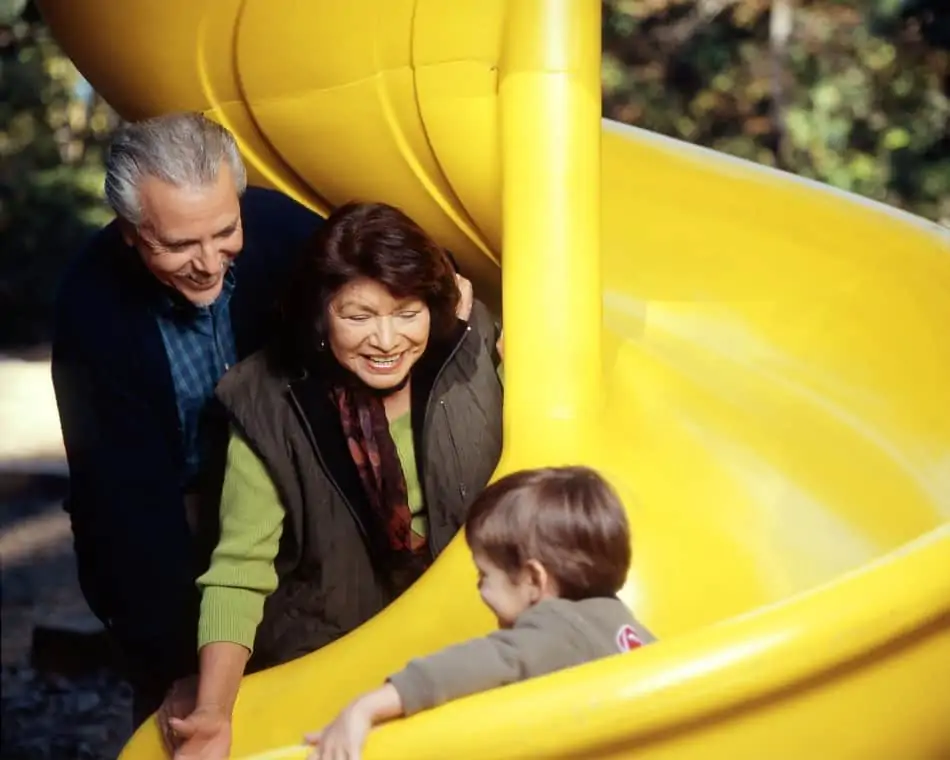
To Go Down, First You Must Go Up!
Show your child where the stairs are to go up to the top of the slide. You could say “We always use the stairs to go up the slide and we hold on to the railing, so we do not lose our balance. We do not go up the slide by climbing because it is not a safe choice.”
Follow your child up the stairs with your arms ready behind them if they should lose their footing. Reassuring them that you are right there to keep them safe.
Sit Safely When On The Top Of The Slide
Instruct your child to sit at the top of the slide entry way and hold on to the guard rail or side of the slide until they are ready to proceed. Explain they must keep their legs together in the middle of the slide, so they do not get a foot or leg stuck.
Be Ready to Catch at The End Of The Slide
Be at the end of the slide you catch your child as they go down! They will build confidence and for sure want to go again and again!
Small Children May Need Extra Assistance
If your child is too small to walk up the stairs or if they need more hands on guidance you could simply place them at the top of the slide, holding them even as they go down to the end.
Slide Down with a “Wheee!”
A child will also feed off your energy and expressions. Reassuring phrases of encouragement and exclamations of joy go a long way. Send encouraging words as they slide down and a celebration of clapping at their achievement.
Resist the Urge To Go Down The Slide With Your Child
It is not recommended that you go down the slide with your child. An adult weighs more than a child and will naturally go down the slide at a faster rate than the child will. This can create serious injuries for a small child.. A child’s foot can easily get caught on the slide and crushed by the weight of the adult in motion. A child who happens to get a limb caught could very easily break with the force and that would be traumatizing for everyone. Safety first!
How To Introduce Your Child To The Swings
Swings on the playground are enjoyable for all ages. Babies that are able to sit up and grasp things can sit in a baby swing up until about two years of age. Older children can enjoy the big kid swings. Swinging alone successfully takes practice and coordination. While on the swings children will learn
- Balance
- Control
- Coordination
- Movement
Swing Introduction Option One
- Sit Centered and Securely
- Practice kicks
- Kick forward and slightly lean backwards
- Kick legs back and sit up straight
Sit Centered on the Swing
When introducing your child to the swings you could start by sitting them on the swing instructing them to hold on tightly to the chain or rope support. Explain they must always hold on tight so they do not fall off.
Practice Kicks Will Turn into Successful Swinging Movements
From sitting, have your child practice swinging their feet back and forth. Explain the movement of their legs will help the swing begin to move.
Target Practice for Feet
Hold your hands out in front of them and have them swing both legs to touch your hands.
Give them a small push//resistance and they will start to slowly move the swing forward and backwards
Swing Introduction option two:
- Sit Centered and Securely
- Give Child A Starter Push
- Kick forward and slightly lean backwards
- Kick legs back and sit up straight
Begin with A Starter Push
Once your child is sitting on the swing and holding on tight give them a small starter push.
Explain, “When the swing goes forward your feet goes forward too, when the swing starts to go back your feet go back.”
As they swing forward chant:
“Feet together up, feet together down, feet up, feet down.”
Or
“Feet towards the sky, Feet towards the ground.”
This will help with timing and coordination. This will take practice and patience as your child learns to swing. Swinging next to your child and talking them through the moves can be beneficial for the child as well.
Basic Safety Rules Of Swinging.
- Never walk in front of or behind a moving swing
- Hold On Tight
- Watch Out For Others
- Do not throw the swings around
Whole Body Learning
Monkey bars are a whole-body learning experience. Whole body learning engages more than just one area of development. We can now think about all the aspects in which monkey bar play can benefit a child and know how to introduce them successfully to making it on the monkey bars in a safe playground environment.
Last update on 2023-07-23 / Affiliate links / Images from Amazon Product Advertising API