With the cold winter months approaching, you may be wondering what you can do to keep your playground safe and clean. The truth is that ice, snow, and constant rain can make playing outside much more hazardous than the warmer summer weather.
But that doesn’t mean you can’t go outside and enjoy some time on the playground. The most crucial thing you need to do is to make sure the playground is safe for everyone. Pay extra attention to the little things that matter, and all shall be well.
Instead of shutting down everything and restricting your kids to indoors, work on making the playground safe and let them enjoy their outdoor playtime throughout the season.
After all, research shows that children who spend time outdoors during winter tend to be healthier and more active than those who are restricted indoors.
So, what are some of the things you need to do to keep your playground clean and safe during winter? Read on to find out.
Common Problems for Playgrounds during Winter
Good playgrounds are designed to allow kids to play on the surface without the fear of getting injured. Furthermore, they should feel comfortable on the playground since weather can significantly impact how the kid feels when playing outside.
During winter, most of the negative weather elements come into action. Temperatures drop below zero cause a freezing effect to happen. The cold temperatures also harden the ground, making it easier for kids to suffer serious injuries if they fall on it.
In most cases, children will start huddling around together, searching for some warmth and comfort due to the extreme cold. As a parent/caregiver, it is crucial to understand that kids aren’t immune to cold. Therefore, you need to do everything possible to keep them warm.
Constant rain is another common disaster during winter. For playgrounds built on top of natural grass surface, the ground can turn muddy and increase the chances of kids sliding and bruising their body parts.
Furthermore, it increases the chances of kids tracking the mud and other contaminants into the house. This can become quite unsafe and annoying, but you need to find a way of dealing with it. Look for safe ways of refreshing your playground and improving its usability during winter.
Snow is also a huge factor during the cold season. Simple buildings such as canopies can become extremely dangerous if too much snow builds up on top of them. Some playground equipment can also become unusable in certain circumstances since they become wet and slippery, posing a great safety threat to children.
Keeping Your Playground Clean and Safe during Winter
So, what can you do to keep your playground safe and clean during winter? Here are some great tips for you.
1. Start with Prevention
The most important thing you need to do to safeguard your playground during winter is to take appropriate preventive measures. Consider giving your playground a once-over at least two times a year. The first one should be done just before the first snowfall and the second one in spring.

Take time to conduct a complete field check for any loose hardware. If you have installed water play equipment on the playground, ensure you clear and drain the lines. You should also take care of any loose play items.
Gather these items and store them safely because they won’t be used during winter. You will need them again in spring when the sun comes out.
2. Preserve/Repair Wood and Hardware
If you have any wooden playground equipment, you need to take appropriate measures to protect them from the harsh winter conditions. Extreme cold and rainfall can lead to rapid deterioration of wood which can cause a significant safety risk to your little ones.
Make sure you use a non-toxic wood preservative to protect your playground equipment against harsh weather elements.

You should also take time to inspect all hardware and fix any issues you identify, no matter how minor they may seem. Extreme winter conditions can cause hardware parts to loosen, posing a safety risk to your kids.
Ensure you repair or replace all issues with your hardware components before the cold season sets in. Doing so in good time can save you from huge trouble.
3. Inspect Your Playground Surfacing
Winters can be rainy and constant precipitation can easily wash away the material that makes up your playground surfacing.
Therefore, it is crucial to check the surfacing material under and around all play equipment at least once a week to ensure you have adequate cushioning that can prevent severe injuries in case of a fall.
You should also keep in mind that freezing temperature may significantly decrease your playground surfacing material’s impact attenuation (the material’s ability to absorb shock). So, it is always good to check it after every hard freeze.
If your playground is installed on natural grass, consider installing artificial grass. This is because snow can turn natural grass into a nasty pool of mud, and if the grass is exposed to freezing temperatures, the ground below it can easily become rock solid.
The easiest way to counter this is by installing artificial grass on top of the natural grass. Artificial turf is incredibly versatile and can keep your kids safe even in extreme winter conditions.
No products found.
If you use poured-in-rubber, make sure you fill any holes and cracks since they can only get worse with snow and ice. You should also replenish the loose-fill surfacing options such as mulch and wood chips to provide a safe landing for a fall.
4. Remove Seasonal Items
Some playground equipment cannot withstand harsh weather conditions such as rain and snow buildup. To protect such items and safeguard your investment, it is always good to store them away in a safe location until spring, when it is safe to bring them out.
If you cannot take them inside, consider covering them with special covers that can withstand strong winds and snow buildup. The process of moving susceptible playground equipment to safer locations must start as early as possible.
5. Keep Snow Off the Equipment
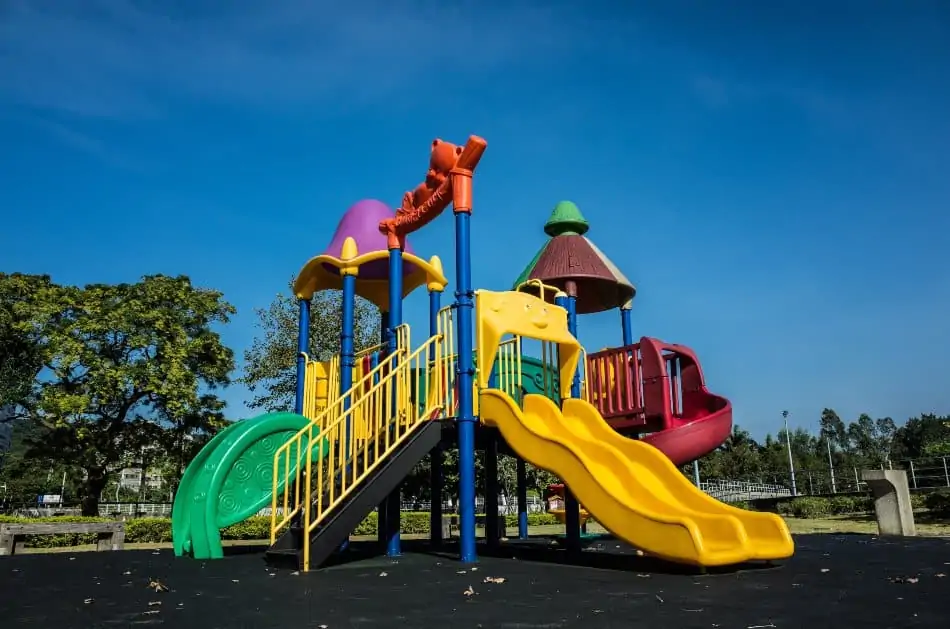
One of the most critical things you need to do during winter is to keep snow off the playground equipment as much as possible. Consider adding a de-icer or removing the snow manually to avoid buildup.
Sometimes, removing the snow manually works much more effectively than using chemicals. If you must use machinery or chemical agents to get rid of the snow, ensure you check the specification of the flooring provided by the manufacturer to avoid causing damage.
Accumulation of snow usually presents a unique challenge and potential safety hazard. No matter how deep it may be, snow is not considered a safe or protective playground surface cover.
6. Remove and Store your Shade Canopies
Although shade protectant canopies can withstand relatively strong winds, they can’t withstand too much snow buildup without collapsing. If you ignore them, snow buildup will cause some pieces to start breaking off in no time.
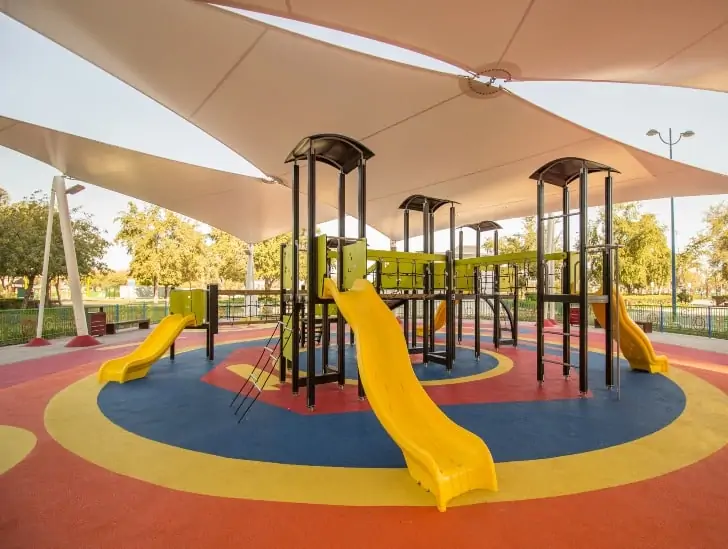
Take time to disassemble your shade canopies and other things you think kids won’t use in the winter and store them safely away. Leaving these play structures on the playground during winter can create a significant safety hazard in the snow.
No products found.
If you cannot remove the canopies by yourself, hire an expert to help you. Sometimes, you may find it difficult to disassemble the canopies correctly without a helping hand.
How to Motivate Your Kids to Go Out and Play during Winter
The truth is that cold weather can have a significant effect on children compared to adults. In some cases, your kids may be resistant to the idea of going out to play during the cold season, and it is for a good reason.
When temperatures hit below zero, most playgrounds are not appealing at all. To avoid this problem and get your children out, you should consider building simple playground shelters to help keep them warm and comfortable.

By installing shelters on the playground, you provide your kids with a safe place to run to when the cold becomes too much for them. In fact, providing them with shelter can significantly alter how they act while on the playground.
They will feel more comfortable and enthusiastic since they have a place to run to and cover themselves from the cold.
Shelters also provide your little ones with ample space for relaxing and socializing with their friends. With plenty of fresh air coming in, your kids can still get the fresh air they want while keeping warm.
Summary
Winter is always a difficult season for participating in certain activities and engaging with playground equipment. However, the cold doesn’t have to stop your kids from enjoying quality playtime outdoors.
All you need to do is take appropriate measures to ensure that the playground is safe and clean. Hopefully, this blog post has taught you how to prep your playground for winter and make your kids enjoy themselves, no matter the season.
Last update on 2023-07-23 / Affiliate links / Images from Amazon Product Advertising API